The exact words, kept whole
A slide can carry a sentence. An essay can carry the full statement, the question that prompted it, and the answer that followed—so the reader judges the claim as it was actually made, not as it was summarised.

Question the claim. Examine the evidence. Test the inference.
A claim made in public deserves more than a reaction. It deserves a reading—slow, sourced, and in full.
On social media, this work travels in carousels: a claim on one slide, a distinction on the next, a verdict by the last. That format makes the point. It cannot hold the whole argument.
This site is the other half. Here, each response is written long-form—the claim quoted exactly, the record set out in order, the reasoning followed step by step—and it stays pictorial: the places, documents, and faces that a claim is about appear alongside the words, because context is part of the evidence.
The site starts fresh. Nothing here is a re-post of the social sets. Every essay is written for this page first.

A slide can carry a sentence. An essay can carry the full statement, the question that prompted it, and the answer that followed—so the reader judges the claim as it was actually made, not as it was summarised.
Dates, briefings, reports, and prior statements laid out in sequence. Scrutiny lives or dies on chronology: what was said first, what was produced later, and what has still not been produced at all.
Long-form lets the counterargument be stated at full strength before it is answered. If a conclusion survives the best case against it, the reader has watched it survive. If it does not, the essay says so.
Nothing is scrutinised until it is stated fairly. The claim is quoted in its maker's own words, with the setting named—who said it, where, and in answer to what. A claim that cannot survive being quoted accurately was never strong; a claim that can deserves a serious test, not a paraphrase.
Take the claim down verbatim, with date and setting.
Find the primary record—not reports of reports.
Split what is shown from what is merely suggested.
Put the strongest counterargument to the claim.
Deliver a verdict—or name what would settle it.
The assertion in full, in its maker's words, with the occasion that produced it. No trimming that changes the sense.
The documents, briefings, and prior statements that bear on the claim, set out in the order they entered public life.
Most claims fail on a collapsed distinction—between similar-sounding things that are not the same. This section draws the line.
The questions the claim must answer, and the disclosure that would answer them. A claim that refuses its own test indicts itself.
The best case for the other side, argued honestly—including the parts that are genuinely hard to answer.
The verdict where the record allows one; where it does not, the exact evidence that would close the question, named plainly.
When a public salary is defended by pointing at a benchmark, the defence sounds technical and settled. It is neither—until the benchmark itself is shown. Benchmarked where, against whom, at what level, and on whose instruction? Those questions, pressed in public, are where this inquiry begins.
The inquiry is not about whether public officers should be paid well. It is about what kind of argument a benchmark is, what it can justify, and what it cannot—especially when the office in question is held in trust for the public.
A comparison describes a market. It does not, by itself, command a decision. Between “others are paid this” and “we must pay this” stands an argument that has to be made, not assumed.
Public office carries duties no market price captures—restraint, example, and accountability to people who cannot take their custom elsewhere.
The lenses. The essays read the question through the social-contract tradition and its challengers:


When a salary is defended with a benchmark, the benchmark becomes the claim. This opening essay takes the phrase itself apart—what a real benchmark contains, what has been shown so far, and what disclosure would end the argument either way.
“Internationally benchmarked” is a phrase built to end conversations. It sounds like a finding—measured, external, beyond argument. But a benchmark is not a mood. It is a document: a defined set of comparators, a chosen level within that set, and a calculation that connects the two to the figure being defended. Until that document is on the table, the phrase is not evidence. It is a claim wearing evidence's clothes.
That distinction is the whole of this essay, and it is worth making slowly. When the pay of a public office is defended by reference to international benchmarking—as it was in October 2026, when the defence was reported in the press and then pressed, on air, by a journalist asking the obvious follow-up—the public is entitled to treat the benchmark itself as the thing to be scrutinised. Not the salary first. The benchmark first. Because if the benchmark holds, the salary has a foundation; and if it does not, everything built on it is decoration.
A comparison describes. It does not command. Between “benchmarked” and “justified” there is an argument, and somebody has to make it.
Any genuine benchmarking exercise, in any serious institution, answers four questions. Which posts were compared—chief executives of what size of organisation, in which countries, in public or private hands? At what point in that distribution was the comparison struck—the median, the upper quartile, the top? Was the comparison drawn on salary alone, or on total compensation, including allowances, benefits, and pension? And who commissioned the exercise, on what terms, and when?
None of these questions is hostile. Each is the kind of question the benchmarking firm itself would ask before signing its own report. A defence that cannot answer them has not been benchmarked in any sense that should persuade a sceptic; it has been described as benchmarked, which is a different and much weaker thing.
The strongest case on the other side deserves its full weight. Public institutions compete for talent with private firms that pay more and ask less in public exposure. Set public pay too low and you do not get virtue—you get a narrower pool, weaker administration, and, in the worst cases, an incentive to make the office pay in other, darker ways. Pay well and hold accountable is a serious doctrine, and this site does not dismiss it.
But notice what that doctrine requires: the accountability half. A benchmark offered without disclosure asks the public to accept the pay while waiving the scrutiny that alone makes high pay legitimate. That is the one combination the social contract does not offer. Locke's point about trust was not that rulers must be cheap; it was that what is held in trust is held on terms the beneficiaries may inspect. Rawls adds the harder question: a settlement is fair only if it can be justified to the least advantaged person who funds it. A benchmark that cannot be shown cannot be justified to anyone.
This argument does not need rhetoric to end. It needs one publication: the benchmarking report itself—comparators, percentile, total-compensation basis, and commissioning terms. Publish it, and the defence stands on evidence this site will examine fairly and, if it holds, say so. Withhold it, and “internationally benchmarked” remains what it is today: an assertion, repeated with confidence, in place of the document that would prove it. The claim asked to be believed. Scrutiny asks it to be shown. Those are not the same request, and only one of them respects the public.
Examined under the method — claim, evidence, reasoning.
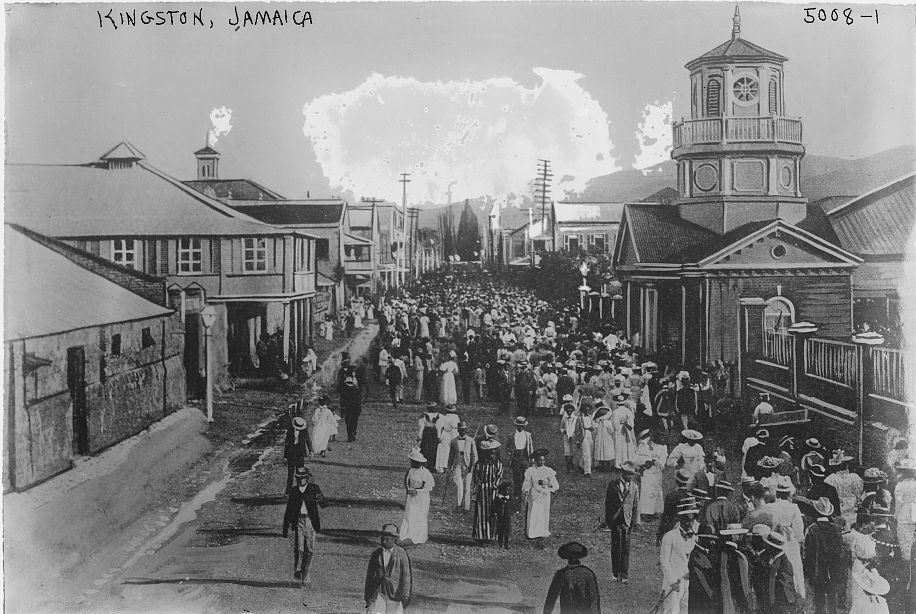
How a Crown Colony with a property-qualified vote became a mass democracy that governs itself—and then had to learn to secure the credibility of that self-government. Adapted by the author from his presentation Jamaica: 20th Century Political History — Redux, with the evidence, the cautions, and the sources carried into the open.
Jamaica began the twentieth century under colonial rule, with political participation restricted by property, class and gender. Garveyism, the 1938 labor rebellion, unions and mass parties widened the political nation. Universal adult suffrage arrived in 1944—before full internal self-government in 1959. The Federation referendum then redirected Jamaica toward separate independence in 1962. And after independence, democratic competition survived ideological conflict, violence and institutional crisis, while electoral reform deepened the credibility of the vote itself.
That is the spine of this essay. Underneath it sit three linked transfers—three questions that organise everything that follows:
Who counted as part of the political nation? Answered in stages, and settled in law by universal adult suffrage.
Which decisions moved from colonial officials to elected Jamaicans? Completed for domestic affairs by full internal self-government.
When did Jamaica acquire political independence? On 6 August 1962. Independence culminated constitutional decolonization—Jamaican political agency began much earlier.
Jamaica entered the century as a British Crown Colony. A governor and appointed officials held executive authority; an elected element existed, but executive authority remained colonial. Property was the gateway to the vote. Women were excluded until 1919—and then only those aged 25 and over who met income or tax thresholds could vote. Most adults remained outside electoral politics. Representation existed; mass democracy did not.
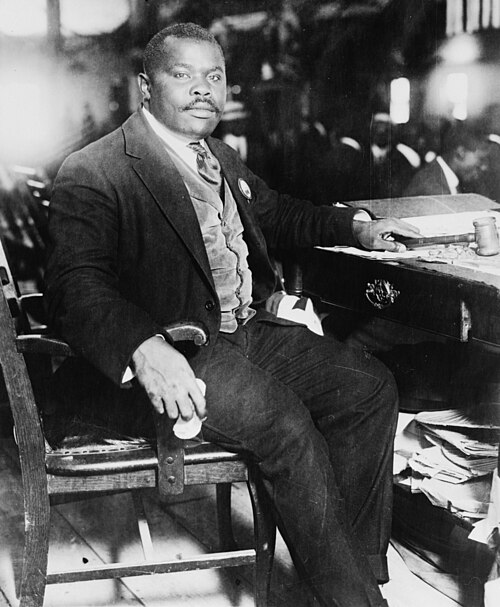
Marcus Garvey translated racial upliftment into a Jamaican political program: the People's Political Party, founded in 1929, connecting Black self-determination with constitutional, labor and social reform—self-government, labor rights, social reform, and mass political speech.
The PPP did not create the later two-party system. What it did was widen the political imagination that mass politics would inherit: the idea that ordinary Jamaicans were a political people, entitled to organise, to speak, and to govern.
The PPP programme, in brief
Economic crisis—low wages, unemployment, falling commodity prices—led to strikes and disturbances across the island. Unions converted protest into durable power, and national organisation became unavoidable. 1938 is the hinge of the century: social grievances produced permanent unions and political parties capable of contesting power.
The founding dates are often blurred together. They should not be: a trade union is not a political party, and the order matters.
| Date | Organisation | What it was |
|---|---|---|
| 23 May 1938 | Bustamante Industrial Trade Union (BITU) | A trade union—not a political party |
| 18 Sep 1938 | People's National Party (PNP) | A political party, organised by O. T. Fairclough and collaborators; Norman Manley was recruited to lead it |
| 8 Jul 1943 | Jamaica Labour Party (JLP) | A political party, led by Alexander Bustamante |
| 2 Apr 1952 | National Workers Union (NWU) | A PNP-aligned trade union |
So: the BITU predates the PNP as an organisation; the PNP predates the JLP as a political party; and Fairclough's organisational role must stay distinct from Norman Manley's leadership.
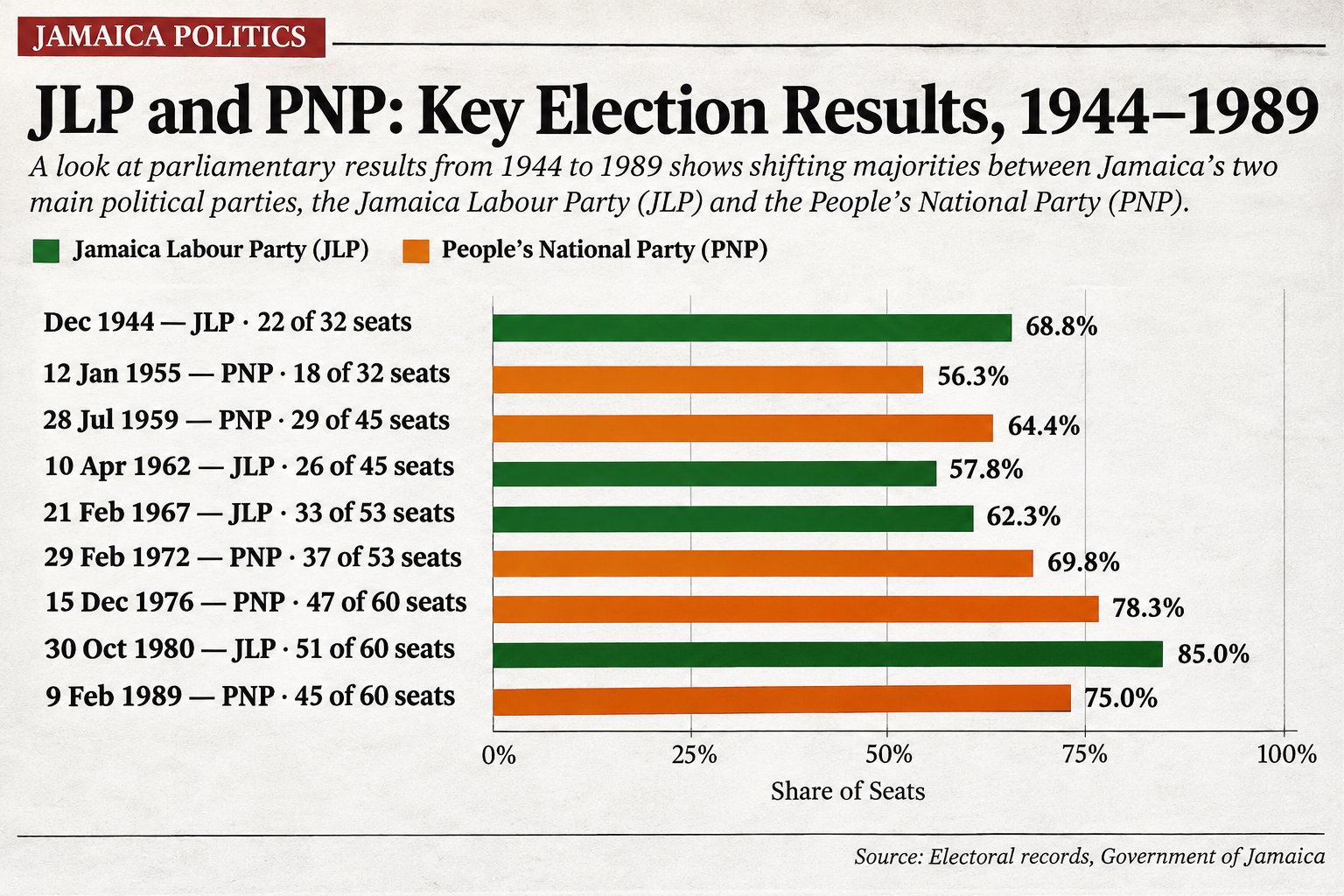
Before 1944, about 60,000 voters were eligible, and property and wealth governed access. After it, all adult citizens aged 21 and over could vote—without property, wealth, race, sex or class qualifications. The machinery came with the right: an Electoral Office in 1943, the Representation of the People law in 1944, and a first mass election in December 1944, which the JLP won decisively with 22 of 32 seats. The electorate changed from a privileged minority into a mass citizen body.
Sources differ on the day of that first mass election: December 12 and December 14, 1944 both appear in the record. This essay therefore dates it to December 1944 and does not assert the 14th as settled. When a date is in dispute, scrutiny says so.
Suffrage came first; power followed in steps. An elected House sat from December 1944. On 5 May 1953, Bustamante became the first Chief Minister. In 1957 a Council of twelve Ministers replaced the Executive Council and the Governor's powers narrowed. On 14 August 1959, Norman Manley became Premier under full internal self-government: elected ministers controlled domestic affairs, while Britain retained external sovereignty until independence.
| Date | Stage |
|---|---|
| 20 Nov 1944 | New constitution |
| Dec 1944 | First mass election (day disputed—see note above) |
| 5 May 1953 | Chief Minister |
| 1957 | Council of Ministers |
| 14 Aug 1959 | Premier, under full internal self-government |
| 6 Aug 1962 | Independence |
The West Indies Federation offered a regional route to independence—Caribbean territories advancing together within a federal state. Manley defended it; Bustamante's Jamaica-first critique prevailed. In the referendum of 19 September 1961, Jamaica voted No: 54.1% against, 45.9% for, on a turnout of about 61.5%. The referendum redirected Jamaica toward separate independence.
Share of votes cast. Turnout was about 61.5% of the electorate.
Source: referendum result as carried in the author's source deck, drawn from the Electoral Commission of Jamaica's Democracy Passport and CARICOM's history of the West Indies Federation (full links in Sources).
One distinction must be kept clean. Bustamante's stated objections—fiscal burdens, unresolved questions of movement and customs, and subsidising smaller territories—are the documented case. Arguments that the campaign was really about personal power are interpretation: they require argument, and this essay does not present them as settled fact.
On 10 April 1962 the JLP won the pre-independence election. On 6 August 1962, Jamaica became sovereign and independent: a Westminster parliamentary model, Queen Elizabeth II as Queen of Jamaica, a Governor-General as her representative, and a bicameral Parliament with a Prime Minister and Cabinet. Bustamante was the first prime minister. Legal sovereignty was complete in 1962—though questions about the form and symbolism of the state lingered.
Precision matters here. It is accurate, from a republican perspective, to describe the monarchy and the Privy Council as unfinished decolonization. It is legally misleading to say Jamaica lacks full independence because it retains the Crown. The Jamaican Crown is today held by King Charles III; that is a fact about the state's form, not a defect in its sovereignty.
The JLP governed under Bustamante, then Donald Sangster, then Hugh Shearer. The work was state consolidation: diplomacy, defence, social insurance, development agencies. On 21 February 1967 the JLP took 33 seats to the PNP's 20, and Sangster defeated Norman Manley in the first general election conducted wholly within the independent state. Michael Manley succeeded his father as PNP leader in 1969.
Michael Manley brought democratic socialism: a more egalitarian political and economic vision, social reform in education, labor, gender and welfare, nonalignment, and a stronger Third World and Caribbean diplomatic posture. The decade then met multiple pressures at once—oil shocks, debt, capital flight, domestic conflict, IMF conditions.
The 1970s must be treated as a multi-causal crisis: external shocks, government policy choices, capital flight, domestic opposition, political violence, lending conditions and foreign pressure, held apart rather than collapsed into a single cause. The evidence itself comes in different grades, and the grades are part of the story:
Oil shocks and global recession; debt and foreign-exchange pressure; government policy choices; capital flight and declining investment; IMF negotiations and conditions.
A U.S. diplomatic cable dated 15 May 1978 records Senator Ronald Irvine conveying Edward Seaga's request that major bilateral donors temporarily suspend aid while Michael Manley remained in office (FRUS 1977–1980, document 187).
Manley alleged CIA involvement in destabilization. Declassified diplomatic records document the allegation and U.S. denials; they do not by themselves prove every allegation of covert action. The Solomon and British High Commission references require document-level sourcing before they can be included as fact.
Direct agency, contributory agency and background conditions are three different things. A scrutiny that cannot tell them apart will convict or acquit the wrong causes.
From 1965, Tivoli Gardens public housing and partisan control helped institutionalise the first durable garrison model. The PNP later developed its own garrison strongholds, including Arnett Gardens. Sequence matters—but neither party escapes responsibility.
The mechanism ran like this: public resources used as partisan instruments; homogeneity, as opposition supporters faced exclusion, displacement or intimidation; enforcement by local strongmen and armed networks; and an electoral effect in which campaigning, association and ballot choice ceased to be fully free. A garrison is anti-democratic precisely because coercive territorial control compromises free association, competitive campaigning, ballot choice and genuine alternation. And a necessary caution: residents are citizens living within a coercive structure—not stereotypes. By the 1980 election, Cold War polarization, economic crisis and severe political violence converged. The lesson cuts against easy celebration: participation and democratic inclusion can expand while coercion degrades electoral freedom.
In 1980 Edward Seaga and the JLP won, and policy turned market-oriented and strongly pro-Western, with substantial Western assistance under IMF and World Bank adjustment programs. Seaga supported the 1983 Caribbean and U.S. intervention in Grenada. That same year came the decade's democratic low point: the PNP boycotted the snap election, and the JLP occupied all 60 seats—a Parliament without an elected opposition. Public-sector retrenchment and austerity produced lasting debate over the social cost of adjustment; specific claims about hospital or school closures need institution-level records and exact dates, and this essay makes none without them.
On 9 February 1989 the PNP returned, winning 45 of 60 seats, and fully competitive two-party elections were restored. The system had reversed itself—through the ballot box.
In 1974 the voting age fell from 21 to 18. In 1979 the Electoral Advisory Committee (EAC) began bipartisan supervision of electoral affairs. Through the 1990s, registration, ballot security and administrative independence strengthened. Universal suffrage is a legal right; credible elections require institutions that make one person, one vote real in practice. The EAC was succeeded by the Electoral Commission of Jamaica in 2006.
| Dimension | Early century | Century's end |
|---|---|---|
| Who votes? | Property-qualified minority | Adult citizens 18+ |
| Who governs? | Colonial Governor dominates | Elected Jamaican government |
| State status | British Crown Colony | Independent constitutional state |
| Election administration | Limited colonial machinery | Electoral Office of Jamaica, with independent EAC oversight |
| Party system | No mass national parties | Durable JLP–PNP competition |
Jamaica's twentieth-century political history is the story of an expanding political nation learning to govern itself—then learning to secure the credibility of that self-government.
The right of all adult citizens to vote without property, wealth, race, sex or class qualification—won in Jamaica in 1944, at age 21; the voting age fell to 18 in 1974.
The 1959 stage at which elected Jamaican ministers controlled domestic affairs, while Britain retained external sovereignty.
Full legal sovereignty, achieved 6 August 1962, within a Westminster parliamentary model—with the Crown retained and questions of the state's form left open.
The bipartisan body that from 1979 supervised electoral affairs; succeeded by the Electoral Commission of Jamaica in 2006.
Foreign affairs, the Jamaica Defence Force, the National Insurance Scheme (1966), the Urban Development Corporation (1968), and national honors (1969).
The JAMAL adult literacy programme, the National Housing Trust (1976), expanded labor and gender protections, and the EAC (1979).
The HEART Trust (1982), export and investment promotion, public-sector rationalization, privatization and market reform, and close U.S. and multilateral alignment.
Three things remain open in this essay's record, and are flagged rather than filled in. (1) The founding dates of the institutions above should be checked against each agency's enabling law before a publication-ready edition. (2) Categorical claims about the social cost of 1980s adjustment—hospital or school closures—need institution-level records and exact dates. (3) The Solomon and British High Commission references in the 1970s record require document-level sourcing before they can stand as fact. And the December 1944 election day (the 12th or the 14th) remains disputed, as noted above.
Every dated claim in this essay traces to the author's source deck and the records below. Official and institutional sources first, then reference and scholarship.
— Lalibela Nile, DIS-MIS-MAL | Information. Examined under the method: claim, evidence, reasoning.
Held for approval. Nothing is published automatically. Your name and comment are sent to the editor by email, and only appear on this page if he approves them for a future edition of the site.

DIS-MIS-MAL | Claim & Scrutiny
A new name for an old reflex. Argumentum ad Machinae Adversarium is the error of rejecting an idea for its machine origin, in some respects merely speculated, rather than its merits—and its lineage runs from the abacus to the chatbot.
In classrooms, newsrooms, and comment threads, a dismissal has become routine. An argument is set aside—not because it is wrong, incoherent, or unsupported, but because a machine may have helped make it. The label does the work. “AI-generated.” No engagement with the logic follows, because none is thought necessary. The origin—or the perceived origin—is treated as the verdict.
In a 2025 paper, I gave the reflex a name: Argumentum ad Machinae Adversarium—Latin for “the argument to the opposition of the machine,” shortened to Machinae Adversari. The fallacy, as I define it, is the rejection of an argument or a creative act on account of it being—and in some respects, perceived to have been—machine-aided. It is a cousin of the ad hominem attack and the genetic fallacy, which likewise substitute an attack on a claim's source for engagement with its content. Only the target has changed: suspicion has moved from the human speaker to the technological medium.
Rejecting an argument because a machine helped—or may have helped—produce it is a fallacy.
The same suspicion greeted the abacus, the calculator, and Mathematica—and each time it faded once the tool became ordinary. “AI-free” purity tests judge provenance, real or suspected, not substance.
Origin is not validity. A claim stands or falls on its coherence and its evidence, not on how it was made.
The phrase ad machinam has circulated informally online—Will Falk used it in a 2024 LinkedIn post to describe the dismissal of machine-generated arguments. I was not aware of that usage when I framed the fallacy; my formulation develops the idea formally and places it in a wider framework. It also bears a resemblance to philosopher John McMurtry's Argumentum ad Adversarium (1986), the fallacy of building one's case against a misrepresented or imagined opponent—a parallel I noticed only afterward, not a source I drew on. My formulation redirects the adversarial locus from the human to the machinic, from rhetorical prejudice to ontological prejudice. The question is no longer whether the opponent is fairly represented, but whether the machine is allowed to participate at all.
The suspicion is not new. It is the latest expression of an old anxiety: that the mind diminishes whenever it externalizes its own capacities. The abacus and the mechanical counters of antiquity drew quiet unease from scholars who feared that reliance on tools would erode the discipline of the mind. The handheld calculator provoked open panic in the twentieth century—educators banned it from classrooms, warning that it would destroy mental arithmetic and make students lazy. The objection wore the clothes of educational rigor, but its core was epistemic: a refusal to accept that comprehension and calculation might coexist through collaboration between human intuition and mechanical precision. In time the fear dissolved—not because humanity grew wiser, I observe, but because the tool became invisible through ubiquity.
Higher mathematics rehearsed the same drama with Mathematica. In the early years of symbolic computing, many—including me—regarded the software with skepticism. It seemed to cheapen the elegance of calculus, to automate what was meant to be a human act of insight. The 3D modeling, the instant visualization, the automated integration all appeared to obscure the struggle that defined mathematical mastery. Use brought a different revelation: the essence of mathematics was not threatened by assistance but extended by it. The machine revealed dimensions of conceptual beauty that chalk and paper alone could not reach.
The pattern, I argue, is the point. Each technological threshold forces a confrontation with the limits of human self-conception—with what we mean when we say “thinking.” The same pattern now repeats with AI: the notion that to employ it is to abdicate intellect, rather than to exercise intellect through amplified means. History suggests otherwise. Every device once feared as corrosive to understanding eventually became its vessel.
Today the fallacy is not only a logical misstep but a social performance—a way of marking moral and intellectual allegiance. Where calculators once “made students lazy,” language models now “make thinkers dishonest”: the same anxiety, reframed for a new medium. Nowhere is it more visible than in academia and journalism, where authorship is both a professional and a moral identity. Uncertain how to categorize hybrid authorship—or authorship merely perceived as hybrid—scholars and editors retreat into purity tests, demanding declarations of “AI-free” writing as though moral worth were measured in lines of unassisted prose. The possibility of using a model to refine reasoning or test counterarguments is treated not as resourcefulness but as contamination.
Public discourse mirrors the unease. In online debates, essays, and policy discussions, critics dismiss an idea by tagging it “AI-generated.” The label itself becomes a rhetorical weapon—an insinuation that automation precludes authenticity, that synthetic origin diminishes or even nullifies meaning. Strikingly, I note, these dismissals rarely interrogate accuracy, coherence, or depth. They operate as cultural shorthand for distrust, betraying an unspoken belief that truth must bear the visible fingerprints of human labor to be credible. Underneath it sits what I call epistemic nostalgia: a longing for an older intellectual order in which the mind stood alone as the solitary author of reason. Yet our devices, databases, and algorithms have long been silent collaborators in the act of knowing. To reject an argument because it passes through silicon rather than flesh, I contend, is not a defense of intellect but a retreat from its expanded form.
Often, the tag needs no proof at all. The charge that something is “AI-made” is in many respects only a suspicion—an accusation without evidence, an assumption. Those levelling it rarely stop to distinguish whether a machine merely aided the work or wholly made it; the nearest assumption, the mere speculation, is enough to invite ridicule and attack. Sometimes the accuser knows—the machine’s role was declared, or it is plain for some other reason. In most cases, though, they do not know. The accusation proceeds anyway.
I have felt the reflex firsthand. The em dash has been a habit of mine for decades—something of a love affair with the mark—and that very habit now invites the charge: readers see the dashes and conclude only a machine could have written the piece. The mark is not evidence of a machine. It is a style I have employed for decades, now mistaken for a machine's fingerprint.
The fallacy, I argue, signals a deeper disquiet about the boundaries of the mind itself. For centuries, Western epistemology assumed cognition was private and biological—bounded by skin and skull. Every tool complicated that assumption: the stylus, the telescope, the printing press, the calculator. AI is simply the latest extension, and the one that makes the mediation impossible to ignore. Philosophers Andy Clark and David Chalmers gave the idea its canonical form in “The Extended Mind” (1998): tools that reliably aid cognition become, in effect, parts of the cognitive system itself. When we delegate memory to paper or computation to silicon, the locus of thinking expands without losing coherence. By that logic, the human–machine partnership is not an aberration but a continuation of reason's own self-amplifying trajectory—and rejecting an argument because a machine participated in its formation—or is thought to have participated—is an ontological category error, mistaking the geography of thought for its validity.
The unease, I argue, is existential before it is epistemic. If machines can assist in argumentation, composition, or creativity, the line between instrument and intellect blurs, and the self must renegotiate its claim to uniqueness. The panic defends the self, not the truth. The fallacy also confuses authenticity with accuracy. Authenticity belongs to authorship; accuracy belongs to reason. A valid syllogism remains valid whether inscribed by monk, mathematician, or model. Collapsing the two categories re-enchants knowledge with a quasi-religious aura, treating purity of origin as a proxy for credibility—intellectually regressive, I contend, reinstating dogma where analysis should prevail.
Every era, I contend, invents its own moral vocabulary to disguise fear as principle. The nineteenth century had decency; the twentieth, authenticity; the twenty-first, human-centeredness. The instinct to condemn machine-aid—real or suspected—is rarely born of logic. It is born of pride, nostalgia, and the quiet terror that the instruments we build might outthink us without ever envying us—a phobia, masquerading as ethics. In ethical terms, the fallacy is a kind of intellectual chauvinism: the belief that moral worth inheres in unassisted cognition. It is visible wherever integrity is defined through individual authorship, and the resulting code of purity becomes a subtle elitism—an insistence that only a certain kind of labor, slow, analog, and unaugmented, deserves epistemic legitimacy. The pattern is old. When printing presses appeared, the literate elite accused them of corrupting scholarship; when calculators arrived, teachers accused them of corroding understanding. Each generation's moral panic masked the same confusion: whether the value of knowledge lies in the suffering required to produce it or in the truth it reveals. The modern iteration prefers the ordeal to the outcome. My stance is unapologetically utilitarian: the moral worth of technology lies not in its purity but in its capacity to serve understanding. Collaboration with machines does not diminish responsibility; it redistributes it. The moral question is not who thought, but how faithfully the thought reflects reality.
If the fallacy marks a failure of intellectual courage, I propose a new discourse ethic to replace fear with method—three principles.
Adopting the framework would shift public debate from paranoia to praxis, I argue. Instead of asking “Who wrote this?” we might ask “What follows if it is true?” The distinction between organic and synthetic thought will persist, I contend, but it need not be adversarial. The post-machinic world will not reward purity; it will reward coherence.
Every epoch rediscovers its fear of its own inventions. The abacus was mistrusted for dulling the mind, the calculator for eroding discipline, the word processor for cheapening prose. Each, in its time, was accused of corrupting the purity of thought—and each eventually dissolved into the ordinary texture of cognition. The anxiety passed not because the tools changed, but because humanity did. Machinae Adversari is the latest rehearsal of this recurring drama. But reason has never been a solitary enterprise. It is a networked phenomenon, born of dialogue, notation, experiment, and translation, and AI merely continues that lineage in a new medium. The fallacy will fade, as its ancestors did, when utility outpaces fear. What endures is the moral measure of inquiry itself: the courage to use every available means in pursuit of understanding. To condemn an argument because a machine assisted its birth—or is believed to have assisted it—is to betray philosophy's oldest duty: to test ideas by their truth, not their genealogy.
I close with a caution about the very proverb that frames such transitions. The “three stages of truth” often attributed to Arthur Schopenhauer—first ridiculed, then opposed, finally accepted as self-evident—is itself apocryphal, as Quote Investigator documented in 2018. Its spirit nevertheless endures, I contend—and the hope is that this fallacy follows the same trajectory: that its abuse proves ephemeral, and that naming it marks a brief but necessary stage in our adaptation to new forms of reason.
“Humanity is never diminished by its tools, only by its timidity in wielding them.”
This article is a journalistic adaptation of my 2025 paper, “Argumentum ad Machinae Adversarium (Machinae Adversari): The Fallacy of Rejecting Machine-Aid” (NileValleyDreams, Nulla Societas). The argument, definitions, and sources are mine; the presentation follows the news-feature form.
Held for approval. Nothing is published automatically. Your name and comment are sent to the editor by email, and only appear on this page if he approves them for a future edition of the site.
“I was only
trolling.”
DIS-MIS-MAL | Claim & Scrutiny
The laundering of hostility through humor. Trolling as a rhetorical refuge from accountability—where the declaration “I was only trolling” is treated as though it retroactively changes the nature of what was said, the intention behind it, and the responsibility of the person who said it.
Trolling has increasingly become not merely a form of provocation but a rhetorical refuge from accountability. That observation deserves examination from philosophical, psychological, linguistic, and even ethical perspectives.
The central issue is that the declaration “I was only trolling” is often treated as though it retroactively changes the nature of what was said, the intention behind it, and the responsibility of the person who said it.
But why should it?
Consider the sequence.
An individual launches into a polemic, makes disparaging remarks, attacks someone’s character, or expresses what appears to be genuine contempt. Once confronted, the individual invokes trolling.
Suddenly, the audience is expected to reinterpret the entire episode as unserious.
This introduces an interesting philosophical problem: does the subsequent characterization of an action determine the original nature of that action?
I would argue that it does not.
An individual may sincerely despise someone and nevertheless choose trolling as the vehicle through which that contempt is expressed. Likewise, someone may harbor envy, resentment, jealousy, or genuine ideological opposition while presenting those sentiments through satire, mockery, or deliberate provocation.
The vehicle does not necessarily invalidate the cargo.
In fact, trolling and sincerity are not mutually exclusive categories. That distinction is fundamental to the argument.
From a teleological perspective, we should ask what the trolling was intended to accomplish. Was the objective merely to entertain? To provoke a reaction? To humiliate someone? To undermine their credibility? To communicate genuine hostility while maintaining plausible deniability?
These purposes can coexist.
Here, the thought experiment becomes particularly interesting because someone can be simultaneously joking and attempting to injure another person’s reputation. The comedic presentation does not necessarily negate the underlying purpose.
From a consequentialist perspective, meanwhile, the consequences of an utterance do not automatically disappear simply because the speaker subsequently characterizes it as trolling. If someone deliberately damages another person’s reputation, the declaration that they were merely trolling does not reverse the damage.
An explanation of one’s behavior is not necessarily a justification for that behavior. And this is precisely where many defenders make their conceptual error.
There is another dimension worth exploring. When someone says, “I was only trolling,” they are attempting to establish how their previous utterances ought to be interpreted. This is a form of retrospective reframing.
In pragmatics, we distinguish between what someone literally says, what they intend to communicate, and what their speech accomplishes. Consider three dimensions:
The subsequent claim of trolling might provide evidence about the speaker’s intended act, but it does not conclusively establish that intention or erase the effects. An individual cannot simply declare that their previous insult was unserious and thereby compel everyone else to accept that interpretation.
Language does not work that conveniently, however much social media seems determined to pretend otherwise.
The reference to acolytes, sycophants, and defenders of famous individuals introduces another important consideration. There are potentially two separate mechanisms operating.
First, the speaker’s self-exculpation. The individual invokes trolling to minimize accountability, avoid embarrassment, or protect their public image. This can function as a form of rationalization.
Second, the audience’s motivated reinterpretation. Supporters may be invested in maintaining a favorable perception of the individual. Consequently, they interpret hostile statements as playful provocation rather than genuine expressions of contempt.
Notice the asymmetry this can create. When an adversary makes the same remarks, they are condemned as malicious. When a favored personality makes them, they are celebrated as a master troll. The content may be nearly identical, yet the moral evaluation changes according to the identity of the speaker.
That is where motivated reasoning, in-group favoritism, and the halo effect can become relevant. However, we should distinguish genuine interpretive disagreement from sycophancy. Not everyone who recognizes trolling as humor is necessarily acting dishonestly.
This, to me, is the strongest part of the observation. Even if we grant that the individual was genuinely trolling, why should that automatically absolve them of responsibility?
There appears to be an unstated premise operating in these exchanges:
The argument fails because the third premise does not follow from the second. Something can be unserious in its presentation and profoundly serious in its implications. Mockery can reinforce prejudice. Satire can communicate genuine hostility. Humor can serve as a vehicle for humiliation. And, importantly, none of those outcomes requires us to establish that every troll secretly believes everything they say.
The ethical question concerns both the speaker’s intentions and the foreseeable consequences of the conduct.
The thought experiment becomes especially useful when subjected to these two questions.
AD QUEM FINEM? To what end? Is trolling being employed to entertain, provoke, disguise genuine hostility, test public sentiment, or secure the freedom to attack without accepting responsibility?
CUI BONO? Who benefits? Does the speaker benefit from having communicated the attack while retaining the ability to disavow it? Do loyal supporters benefit from a convenient interpretation that preserves their favorable view of the speaker?
These questions do not prove concealed malice. They help us examine whether the trolling explanation is consistent with the speaker’s conduct, incentives, and broader pattern of behavior.
I would introduce one qualification to strengthen the argument. We should not assume that trolling is intrinsically malicious any more than we should assume that trolling is intrinsically harmless. Someone may troll without harboring genuine animosity. Someone else may troll precisely because they harbor genuine animosity.
Therefore, trolling is better understood as a mode of communication or behavior, not a reliable indicator of the speaker’s sincerity, moral innocence, or underlying psychological disposition. This allows us to challenge the defense without committing the opposite error of treating all trolling as concealed hostility.
Trolling may describe the manner in which an utterance is delivered, but it does not necessarily disclose the sincerity of its content, establish the innocence of its intention, or absolve the speaker of responsibility for its consequences.
I would go a little further. What I am identifying is the potential laundering of hostility through humor, whereby genuine antagonism is packaged as entertainment and subsequently defended as harmless provocation.
The most revealing question is not simply whether the individual was trolling. It is whether the designation trolling is being used descriptively, to explain what happened, or exculpatorily, to excuse what happened. Because those are two fundamentally different propositions, and social media has developed a remarkable habit of treating them as interchangeable.
“I was only trolling” does not change what was said, establish the speaker’s innocence, or absolve the speaker of responsibility for the consequences.
The speech-act distinction (locutionary, illocutionary, perlocutionary) shows a later label cannot erase effects already produced; the same remarks are condemned as malicious from an adversary and celebrated as master trolling from a favored personality; empirical work finds trolling enjoyment associated with sadism, psychopathy, and Machiavellianism.
Trolling is a mode of delivery, not a verdict on sincerity or innocence. Whether the label is used descriptively or exculpatorily is the question that decides the matter—and the two uses are not interchangeable.
Held for approval. Nothing is published automatically. Your name and comment are sent to the editor by email, and only appear on this page if he approves them for a future edition of the site.

Every image on this site is captioned with what it is and why it is there. Where an image comes from an official or press source, the source is named. A picture that cannot be captioned honestly does not run.
The latest piece
Trolling as a rhetorical refuge from accountability—where the declaration “I was only trolling” is treated as though it retroactively changes the nature of what was said, the intention behind it, and the responsibility of the person who said it.
Read the article →The laundering of hostility through humor: plausible deniability, intention versus consequence, retrospective reclassification, motivated reinterpretation, and whether unseriousness confers immunity—examined in seven sections, with a concluding proposition and six sources.
The fallacy of rejecting an argument for its machine origin—Argumentum ad Machinae Adversarium—traced from the abacus to the chatbot, adapted from the author's 2025 paper.
Jamaica's twentieth century: from a property-qualified Crown Colony vote to universal suffrage, self-government, independence in 1962, and the long work of making elections credible—with charts, definitions, open questions, and full sources.
What an international benchmark must contain before it can justify a public salary—and what has actually been shown.
Locke, Hobbes, and Rawls read against the modern claim that public pay is a purely market question.
The strongest counterargument, examined whole: what accountability would have to look like for the bargain to hold.
What the example of leadership by restraint asks of office-holders who plead the market.
The specific questions—put to any benchmarking defence, anywhere—that separate a finding from a phrase.
No piece matches that search yet. Try the article's name, or a single keyword.
Heard a public claim that sounds settled but shows nothing? Send the exact words, where they were said, and any record you have. Claims are taken up in order, and only where the primary record can be found.
nile@dismismalinfo.org
Leave a comment
Held for approval. Nothing is published automatically. Your name and comment are sent to the editor by email, and only appear on this page if he approves them for a future edition of the site.